 MeloAuto-Trusted PLC & DCS Parts Supplier
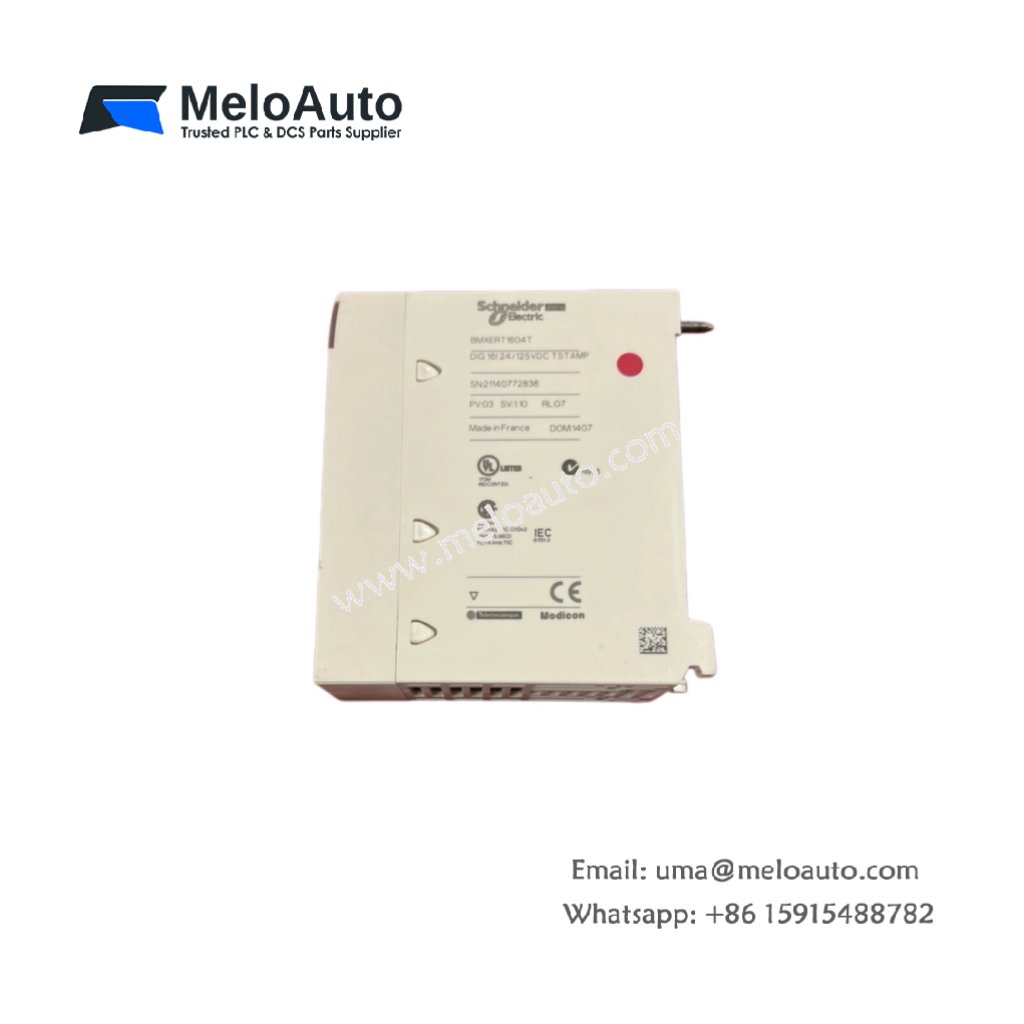
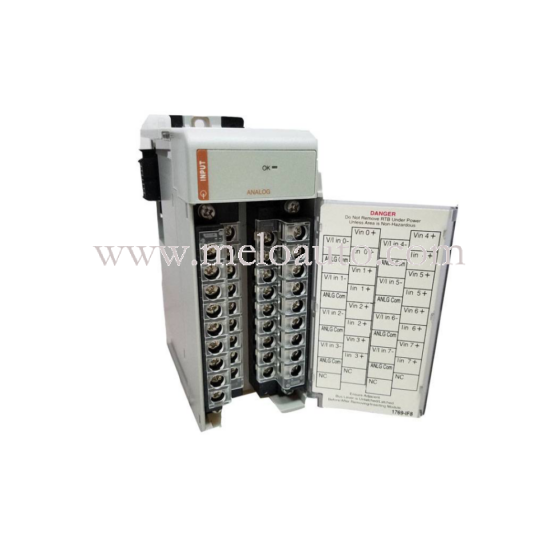
The Schneider BMXERT1604T accepts various analog and digital signals for M340 control systems. This versatile module handles temperature, voltage, current, and discrete inputs simultaneously. Therefore, it reduces the number of modules needed for mixed-signal applications.
Product Overview
We engineered this multifunction module for maximum I/O flexibility in compact racks. Its 16 channels configure individually for different signal types. Moreover, this unit includes high-speed counter modes for position feedback.
Technical Specifications
| Parameter | Specification |
|---|---|
| Dimensions | 10.5 cm (height) x 8.5 cm (width) x 12.0 cm (depth) |
| Weight | 0.29 kg (approximately 0.64 lb) |
| Interface Type | Single bus connector plus 28-position removable terminal |
| Component Count | 168 components including 16-bit ADC and amplifiers |
| Energy Storage | 12 ceramic capacitors (0.1 µF) plus 4 tantalum (10 µF) |
| Analog Inputs | 12 channels, 16-bit, multifunction |
| Digital Inputs | 4 channels, 24V DC, high-speed |
| Input Types | 0-10V, ±10V, 0-20mA, 4-20mA, TC, RTD |
| Thermocouple Types | J, K, T, N, E, R, S, B |
| RTD Types | PT100, PT1000, Ni100, Ni1000 |
| High-Speed Counts | 100 kHz on dedicated digital channels |
| Update Rate | 20 ms for all analog channels |
| Accuracy | ±0.2% of full scale at 25°C |
Multifunction Architecture
The Schneider BMXERT1604T uses a single 16-bit ADC multiplexed across all channels. Its twelve ceramic capacitors filter noise on each analog input path. Additionally, four tantalum capacitors stabilize the reference voltage for accurate conversion. You get precise measurements across all input types without external signal conditioners.
Energy Storage Components
Twelve ceramic capacitors decouple high-frequency noise from each input channel. Four tantalum capacitors provide charge for the ADC during conversion cycles. A stable reference voltage directly affects measurement accuracy and repeatability. These capacitors maintain their properties across the full temperature range. Consequently, the module performs well without frequent recalibration.
Channel Configuration
Channels 1 through 8 accept analog voltage or current inputs. You configure each channel independently using the control software. The module stores configuration in non-volatile memory.
Installation Steps
Insert this module into any M340 rack slot with a backplane connector. Align the Schneider BMXERT1604T with the plastic guide rails. Push the module firmly until its locking mechanism clicks into place. Then secure the module with the top and bottom retaining screws. Connect field wiring to the removable 28-position terminal block.
Thermocouple Wiring
Use the correct extension-grade wire for each thermocouple type. Connect the positive lead to the channel terminal mark with a plus sign. Connect the negative lead to the corresponding terminal with a minus sign. The module provides internal cold junction compensation on the terminal block. Keep thermocouple wires away from sources of heat or cold drafts.
RTD Wiring
Connect three wires to each RTD channel for lead compensation. The module excites the RTD with a precision 250 µA current source. Wire colors typically follow red for positive, white for negative, and white for sense. The third wire compensates for resistance in the field wiring. Maximum total lead resistance should not exceed 25 ohms per wire.
High-Speed Digital Inputs
Channels 13 through 16 accept up to 100 kHz pulse rates. Each channel includes a programmable debounce filter from 0 to 10 ms. Use these channels for encoder feedback or high-speed counting. The module includes a 32-bit counter that rolls over automatically. You can configure each channel for up/down counting with direction control.
Application Scope
This multifunction module suits process control and machine automation. Many factories use the Schneider BMXERT1604T for temperature monitoring and position feedback. Its versatility reduces spare part inventory requirements significantly.




WeChat
Scan the QR Code with wechat