 MeloAuto-Trusted PLC & DCS Parts Supplier
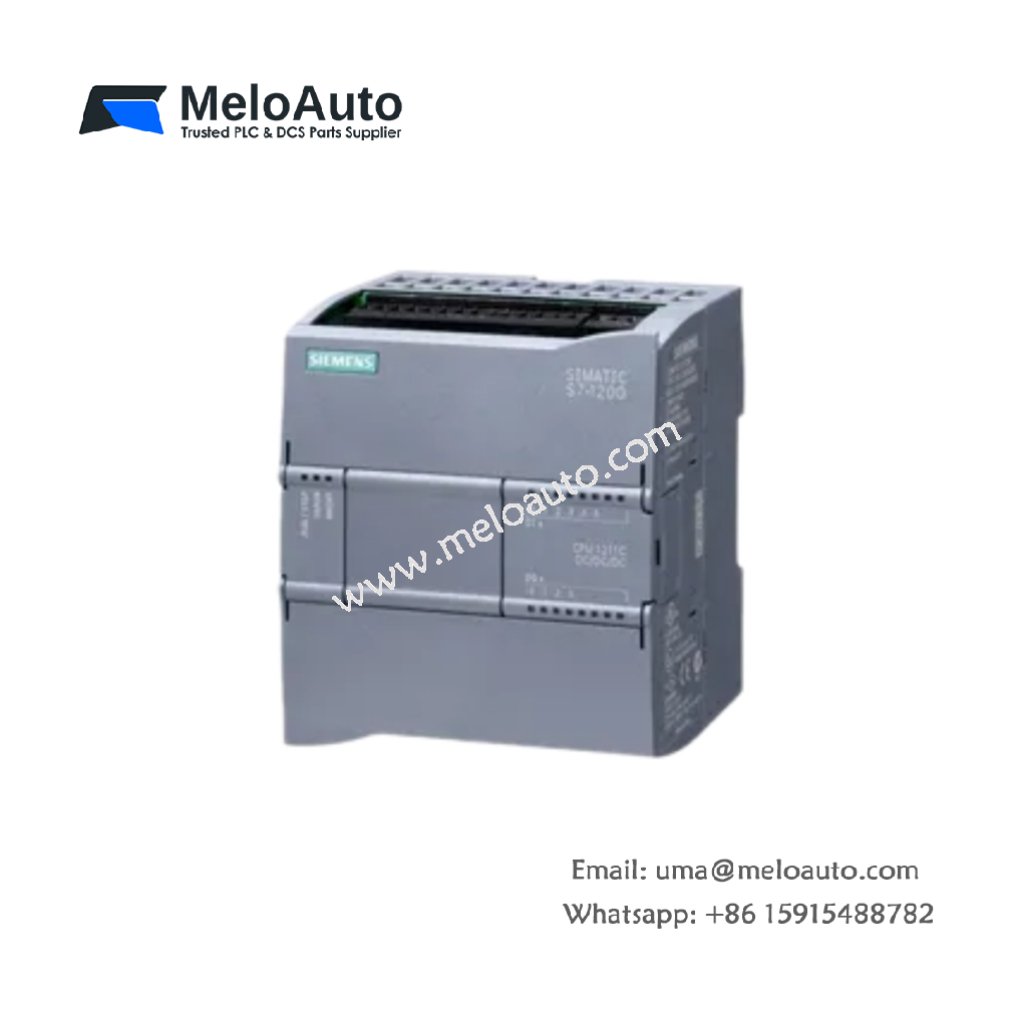
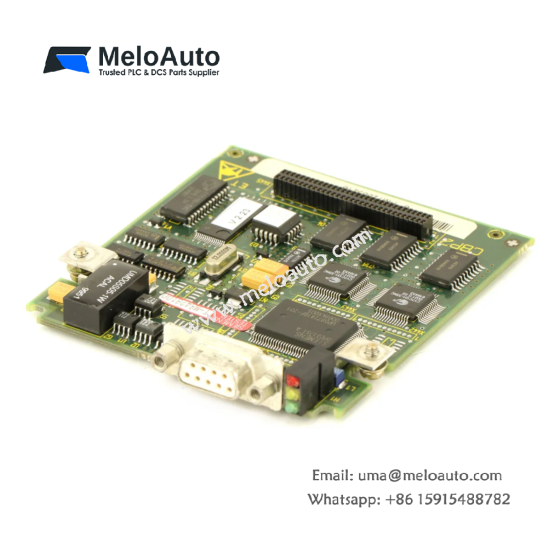
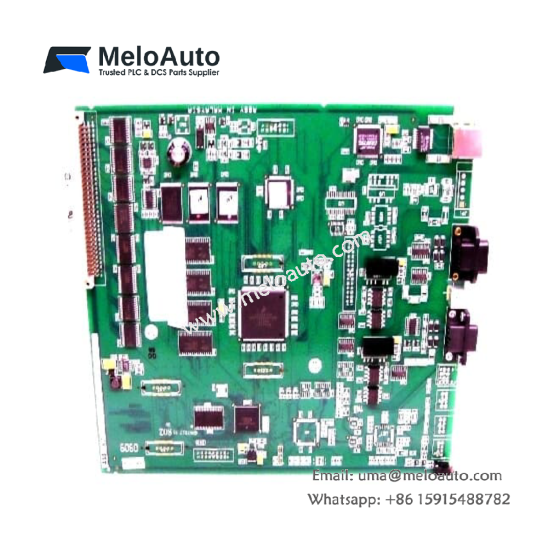
This communication card provides T-link network connectivity for FUJI electric automation systems. It manages high-speed data exchange between the PLC and remote I/O devices. Therefore, it enables distributed automation architecture for large industrial applications.
Physical and Network Specifications
The FUJI NC1H-TL1 measures 11.0 cm in length and 7.5 cm in width. Moreover, its card weight equals approximately 0.12 kg for slot mounting. A single 9-pin D-sub connector provides the T-link network interface. Additionally, this card includes status LEDs for network diagnostics and activity monitoring.
| Parameter | Specification |
|---|---|
| Brand | FUJI Electric |
| Full Model | NC1H-TL1 |
| Category | T-link Interface Communication Card |
| Dimensions (L x W x H) | 11.0 cm x 7.5 cm x 2.5 cm (4.33″ x 2.95″ x 0.98″) |
| Card Weight | 0.12 kg (0.26 lbs) |
| Primary Interface | 1 x 9-pin D-Sub Female (T-link) |
| Backplane Interface | 1 x 32-pin Male Connector (FUJI Rack) |
| Network Protocol | T-link (FUJI Proprietary) |
| Transmission Rate | 1 Mbps (Fixed) |
| Bus Topology | Bus (Daisy Chain) |
| Maximum Cable Length | 500 meters (1640 feet) per Segment |
| Maximum Nodes per Network | 64 Devices |
| Communication Type | Cyclic I/O Update + Message Transfer |
| Scan Time | 2 ms for 256 I/O Points |
| Bus Interface | RS-485 (Differential, Isolated) |
| Bus Termination | External Terminator Required (Both Ends) |
| On-Board Components | 1 Communication ASIC + 1 Isolated Transceiver + 1 Oscillator (8 MHz) + 2 Optocouplers + 4 Protection Diodes + 1 Voltage Regulator + 2 Isolation Transformers |
| Energy Storage | 2 x 47 µF Electrolytic Capacitors (35V) + 2 x 10 µF Tantalum (25V) |
| Operating Voltage | 5 VDC from Backplane (0.3 A Typical) |
| Power Consumption | 1.5 W (Typical) |
| Isolation Rating | 1500 Vrms (Network Port to Logic) |
| Operating Temperature | 0°C to +55°C (32°F to 131°F) |
| Storage Temperature | -25°C to +85°C (-13°F to 185°F) |
| Mounting Type | FUJI PLC Rack (Single Slot) |
| Status Indicators | 1 Green LED (Power) + 1 Green LED (Link Active) + 1 Yellow LED (Data Exchange) + 1 Red LED (Fault) |
T-link Network Features and Performance
The FUJI NC1H-TL1 functions as a T-link master or slave communication interface. Specifically, the 1 Mbps transmission rate ensures deterministic data exchange for critical I/O. In addition, the bus topology supports daisy-chain wiring for simple installation. Moreover, this card handles up to 64 nodes on a single network segment. Consequently, it provides fast and reliable communication for distributed I/O applications.
Energy Storage and Network Stability
This communication card stores energy using four onboard capacitors for power filtering. Specifically, two electrolytic capacitors smooth the 5 VDC supply for stable ASIC operation. In addition, two tantalum capacitors provide high-frequency noise suppression for the transceiver. Furthermore, these capacitors maintain network communication during brief power interruptions. Therefore, the FUJI NC1H-TL1 ensures uninterrupted data exchange on the T-link bus.
Configuration and Diagnostic Features
Four LED indicators provide operational status at a glance on this card. First, a green Power LED lights when the 5 VDC backplane supply is present. Second, a green Link Active LED illuminates when the cable connection is good. Third, a yellow Data Exchange LED flashes during network communication. Finally, a red Fault LED indicates hardware errors or bus cable breaks. Thus, you can diagnose network issues instantly without external tools.
Installation and Network Wiring
This communication card requires external bus termination at both ends of the T-link network. For instance, you must install active terminators on the first and last devices. In addition, use shielded twisted-pair cables for the T-link bus connection. Moreover, the card fits into any standard FUJI PLC rack slot. Therefore, this module integrates seamlessly into existing T-link installations.






WeChat
Scan the QR Code with wechat