 MeloAuto-Trusted PLC & DCS Parts Supplier
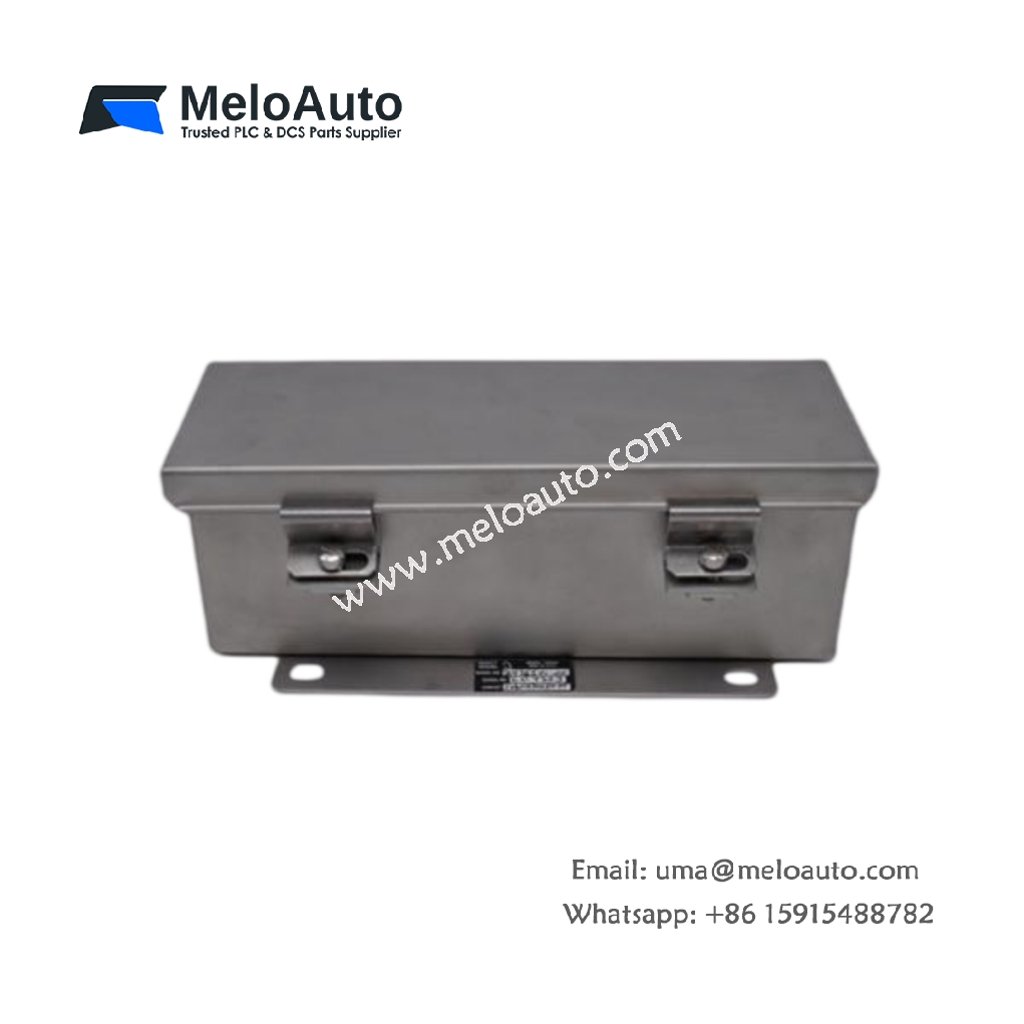
The 24765-01-01 functions as a DC LVDT assembly within the Bently Nevada 24765 series. This linear variable differential transformer measures valve position and reciprocating motion in steam turbines. Its DC output simplifies wiring to control systems and data loggers.
Technical Specifications
| Parameter | Value |
|---|---|
| Model | 24765-01-01 |
| Category | DC LVDT Assembly |
| Measurement Range | 0 to 25.4 mm (0–1 in) |
| Output Signal | 0 to 10 Vdc, DC-coupled |
| Linearity | ±0.5% of full scale |
| Frequency Response | 0 to 100 Hz |
| Supply Voltage | ±15 Vdc nominal |
| Current Draw | Approx. 25 mA maximum |
| Operating Temperature | -35°C to +120°C |
| Storage Temperature | -55°C to +150°C |
| Weight | Approx. 0.6 kg |
| Dimensions | 150 mm × 30 mm diameter |
| Mounting | 3/4-16 UNF thread |
| Connector | 6-pin Mil-spec |
| Part Count | Single LVDT assembly |
Signal Path and Interface Details
The assembly drives an internal oscillator that excites the LVDT primary winding. Subsequently, demodulator circuits convert the secondary signal into a DC voltage. Because the electronics sit inside the housing, no external conditioning module is needed. The 24765-01-01 therefore interfaces directly with PLC analog inputs.
Energy Storage and Power Draw
No internal battery or supercapacitor resides inside this assembly. The unit relies entirely on the external ±15 Vdc supply for operation. Consequently, power loss immediately interrupts the output signal. System designers should therefore provide a regulated, low-ripple DC source per channel.
Installation Notes
Operators mount the LVDT body through a 3/4-16 UNF threaded hole on the machine. The core connects to the moving valve stem or actuator rod. Meanwhile, the IP65 enclosure tolerates dust and water spray in turbine halls. Always align the core axis with the measured travel path.