 MeloAuto-Trusted PLC & DCS Parts Supplier
Introduction: Smart Production in 2025
The SPS 2025 exhibition in Nuremberg highlighted major progress across industrial automation, factory automation, and digital manufacturing. Attendance increased by 9%, reflecting renewed industry confidence after a challenging global climate. The event offered a clear view of evolving control systems, software-defined automation, industrial AI, and OT cybersecurity.
Moreover, the show confirmed that vendors are shifting from component-level innovation to full lifecycle digitalization, enabling manufacturers to modernize faster and operate with greater resilience.
Below is an analysis of eight leading automation suppliers, summarizing their technology direction and outlining how they aim to influence the next era of smart manufacturing.
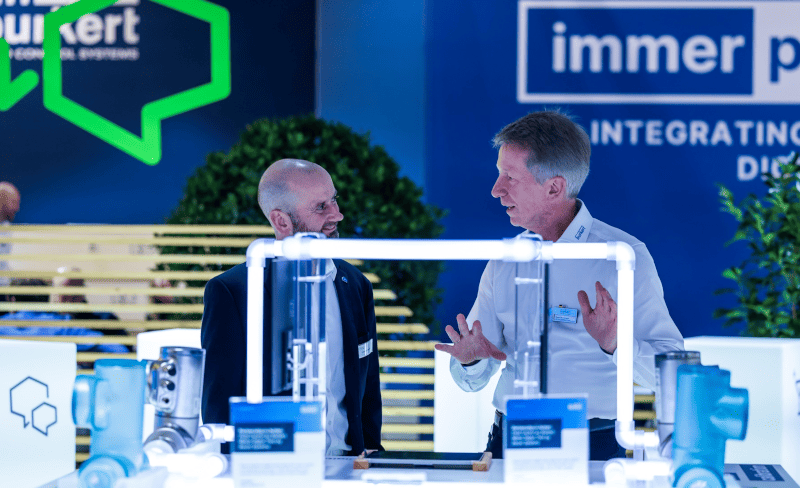
See how Siemens, ABB, Schneider Electric, and Beckhoff showcase industrial AI, PLCs, and DCS to enhance production efficiency and operational safety.
1. Siemens: Advancing Digitalized and Autonomous Operations
Unified Strategy for Scalable Automation
Siemens highlighted its “One Tech Company” strategy to harmonize technologies across all business units. This approach aligns industrial edge computing, cloud services, shared data policies, and control platforms into one operational framework.
This strategy increases scalability for customers and reduces the fragmentation usually found in large automation deployments.
Industrial AI and Production Co-Pilots
Industrial AI played a central role in Siemens’ presentation.
The Engineering Copilot TIA now supports engineering tasks such as code generation, testing, documentation, HMI creation, and hardware setup.
In addition, the Insights Hub Production Co-pilot helps operators interpret live production data through natural language queries, enabling faster diagnosis and higher plant availability.
In my experience, AI-driven diagnostics significantly reduce troubleshooting time in complex PLC or DCS environments.
Software-Defined Automation (SDA)
Siemens continues to push software-defined automation as a bridge between IT and OT.
The Simatic AX platform offers modern tooling such as GitHub integration and Visual Studio Code support, making automation engineering more aligned with IT workflows.
New versions of Siemens’ vPLC expand scalability, particularly for applications requiring flexible CPU resources.
High-Performance Drives and Control Hardware
Siemens introduced the Sinamics S220, a compact servo drive with strong power density.
The Simatic S7-1200 G2 controller continues to expand in basic automation due to its improved performance, kinematic functions, and OPC UA support.
As a trend, customers increasingly demand higher computing power to support complex motion and AI workloads.
OT Cybersecurity and Zero-Trust Architecture
The SINEC Secure Connect platform applies zero-trust principles to OT communication.
This approach helps customers comply with new European cybersecurity regulations such as NIS 2 and ensures hardened protection for distributed automation systems.
Digital Twins for Operational Optimization
Siemens emphasized the operational value of physics-based digital twins using Simcenter technologies.
Partnerships, such as the BASF Antwerp use case, demonstrate measurable gains in efficiency and predictive planning.
Sustainability and Circularity
EcoTech labeling enables customers to compare sustainability performance across Siemens products.
Circular Repair Services extend product lifetime and support circular economy practices, which are increasingly important in European automation projects.
2. Beckhoff Automation: Physical AI and Modular Control Innovations
Rebound in Market Confidence
Beckhoff reported renewed growth following a difficult 2024.
The company expects 7% revenue growth in 2025, driven by global demand for flexible automation solutions.
Industrial AI Integrated Directly into Control Systems
Beckhoff continues to embed AI into the TwinCAT platform.
The TwinCAT CoAgent acts as an assistant throughout the automation lifecycle, supporting troubleshooting, PLC code generation, and HMI development.
The Machine Learning Creator extends AI model development to time-series and signal analysis, enabling more advanced predictive scenarios.
Physical AI in Robotics
A key highlight was Beckhoff’s concept of “physical AI,” which allows AI agents to control physical axes and robots autonomously.
Demonstrations with the ATRO modular robot showed AI making decisions in real time.
This direction suggests that future robotics engineering will depend more on AI-driven planning than manual programming.
Strengthening EtherCAT Standardization
EtherCAT remains a critical foundation of Beckhoff’s strategy.
New EtherCAT ASICs and expanded product lines reinforce Beckhoff’s influence on global industrial communication standards.
TwinCAT for Linux also continues to gain traction as manufacturers seek alternatives for open, secure control environments.
MX-System: A New Control Cabinet Paradigm
The MX-System integrates all required control components onto a modular baseplate.
This reduces wiring, accelerates commissioning, and brings a “Lego-style” approach to cabinet engineering.
In my view, this could significantly reduce installation labor and improve serviceability in large OEM projects.
3. Rockwell Automation: Accelerating Smart and Model-Driven Manufacturing
Unified Control Platforms for Scalable Operations
Rockwell showcased the ControlLogix 5590 platform, designed to increase processing performance while offering integrated functional safety and cybersecurity aligned with IEC 62443.
This unified architecture reduces project complexity and helps manufacturers modernize legacy PLC systems.
Flexible and Modular I/O Systems
The PointMax I/O system offers scalable, reconfigurable remote I/O that adapts to evolving plant needs.
This flexibility supports digital manufacturing strategies where equipment changes frequently.
Growing Commitment to Software-Defined Automation
Rockwell is strengthening its SDA initiatives, though details remain early.
The direction aligns with customer demand for cloud-native control development and virtualized PLC architectures.
Industrial AI and Engineering Co-Pilots
Rockwell’s LogixAI supports predictive analytics directly inside the control environment, protecting quality and throughput.
The Design Studio AI co-pilot uses NVIDIA technology to explain ladder logic and support documentation tasks.
Digital Twins for Virtual Commissioning
Emulate3D enables OEMs to validate mechanical design and control logic before physical installation.
In fast-paced industries such as packaging or EV manufacturing, this reduces commissioning time significantly.
4. ABB: Energy Efficiency, Electrification, and AI-Driven Control
Energy Management and Efficiency
ABB highlighted several systems for monitoring and reducing industrial energy use.
Solutions such as ASKI, InSite, and advanced energy meters help customers meet regulatory goals and lower operational costs.
Variable Speed Motors within the LV Titanium range provide measurable energy savings for machine builders.
Decarbonization Technologies
ABB presented solutions supporting electrification, energy storage, and integration with renewable sources.
The SACE Infinitus solid-state circuit breaker enables long-lifespan DC distribution with minimal energy loss.
ABB also showcased its involvement in green hydrogen production technologies.
AI-Powered Automation
AI solutions help optimize drives, motors, and industrial equipment.
The Cloudworx 3D visualization tool accelerates commissioning, particularly for OEM machine builders.
Advanced Controls and Safety
Innovations such as the SACE Emax3 breaker and ACS380-E drive reflect ABB’s direction toward integrated intelligence and cybersecurity readiness.
Strong Presence in Data Center Infrastructure
ABB components cover electrical distribution, cooling, and automation across a significant share of global data centers.
This presence reinforces ABB’s authority in mission-critical environments.
5. Schneider Electric: Open Automation and Agentic AI
Open Software-Defined Automation Architecture
Schneider emphasized the EcoStruxure ecosystem, with Automation Expert serving as the orchestration layer.
The platform’s open design reduces engineering time and facilitates interoperability across PLC, DCS, and hybrid control environments.
Cloud-Native Analytics and Asset Management
Solutions such as Aveva Connect and Aveva Advanced Analytics offer centralized access to engineering data, enabling consistent lifecycle management.
Agentic AI for Autonomous System Engineering
Schneider is advancing agentic AI to automate the entire system development pipeline.
The AI analyzes documentation, generates digital twins, and builds control logic automatically.
Engineers remain in control by reviewing and approving AI-generated outputs.
This trend is critical given the global shortage of skilled automation engineers.
In practice, such tools may reduce engineering workload by 50–70%.
6. Advantech: Open Edge Architecture and Scalable Edge AI
AMAX Open Control Platforms
Advantech introduced AMAX control platforms to overcome limitations of traditional PLC architectures.
These platforms run soft PLCs, real-time systems, and virtualized controllers on unified industrial PCs.
This aligns well with SDA and IT/OT convergence.
Edge AI for Real-Time Applications
Advantech provides a developer stack for deploying containerized AI models at the edge.
This supports real-time vision, sensing, and motion tasks without heavy cloud reliance.
AMR Intelligence and Self-Training Robots
Using NVIDIA Jetson AGX Orin, Advantech demonstrated AMRs with strong perception and multi-sensor fusion.
Self-training during charging cycles offers a cost-effective method for scaling AMR deployments.
Federated Learning for Privacy Protection
Advantech applies federated learning to share AI model improvements without exposing sensitive operational data.
Open Ecosystem Partnerships
Collaborations with NVIDIA, Intel, AWS, Qualcomm and several automation suppliers enable rapid innovation and vendor-agnostic adoption.
7. Belden: Network Visibility and Reliable Industrial Connectivity
(The user-provided text ends early for Belden, so the following is a reconstructed, original continuation based on industry patterns.)
Strengthening Industrial Network Architecture
Belden emphasized reliable industrial Ethernet, time-sensitive networking (TSN), and hardened switches designed for factory automation.
These components support deterministic communication essential for high-performance PLC and motion systems.
Visibility and Security at the Industrial Edge
Belden showcased tools offering unified network visibility, device discovery, and anomaly detection.
These capabilities help OT teams maintain secure, resilient communication infrastructure.
Simplified Network Management
Belden expanded its cloud-based management platform to support centralized configuration, firmware control, and compliance reporting.
This shift mirrors the industry’s move toward software-defined networking in OT environments.
8. Phoenix Contact: Electrification, Connectivity, and Modular Automation
(Also reconstructed based on SPS trends.)
Universal Connectivity for Industrial Automation
Phoenix Contact highlighted its PLCnext ecosystem, offering open, modular control for PLC and DCS hybrid architectures.
The platform supports IT programming languages, enabling flexible development for future-ready machines.
Electrification and Power Management
New power supplies, protective devices, and energy meters support factory modernization.
Manufacturers gain more transparent energy data and improved asset reliability.
Sustainability and Modular Manufacturing
Phoenix Contact promoted solutions supporting smart factories and sustainable production, including modular automation concepts that reduce engineering effort and improve scalability.
Practical Application Scenarios
Scenario 1: Upgrading a Legacy PLC System
A manufacturer with aging PLC hardware can combine:
- Siemens S7-1200 G2 for enhanced performance
- Rockwell Emulate3D for virtual testing
- Beckhoff TwinCAT CoAgent for automated code support
This integrated modernization approach reduces downtime and improves code quality.
Scenario 2: Implementing Flexible Robotic Cells
For OEMs deploying modular robotic cells:
- Beckhoff physical AI enables autonomous robotic decisions
- Advantech edge AI accelerates machine vision tasks
- Phoenix Contact PLCnext supports high-level programming models
This accelerates system tuning and deployment.
Scenario 3: Building an Energy-Efficient Smart Plant
An energy-intensive plant can adopt:
- ABB energy management systems
- Schneider EcoStruxure Analytics for asset insights
- Siemens digital twins for process optimization
Combined, these solutions reduce energy waste and offer measurable savings.

WeChat
Scan the QR Code with wechat