 MeloAuto-Trusted PLC & DCS Parts Supplier
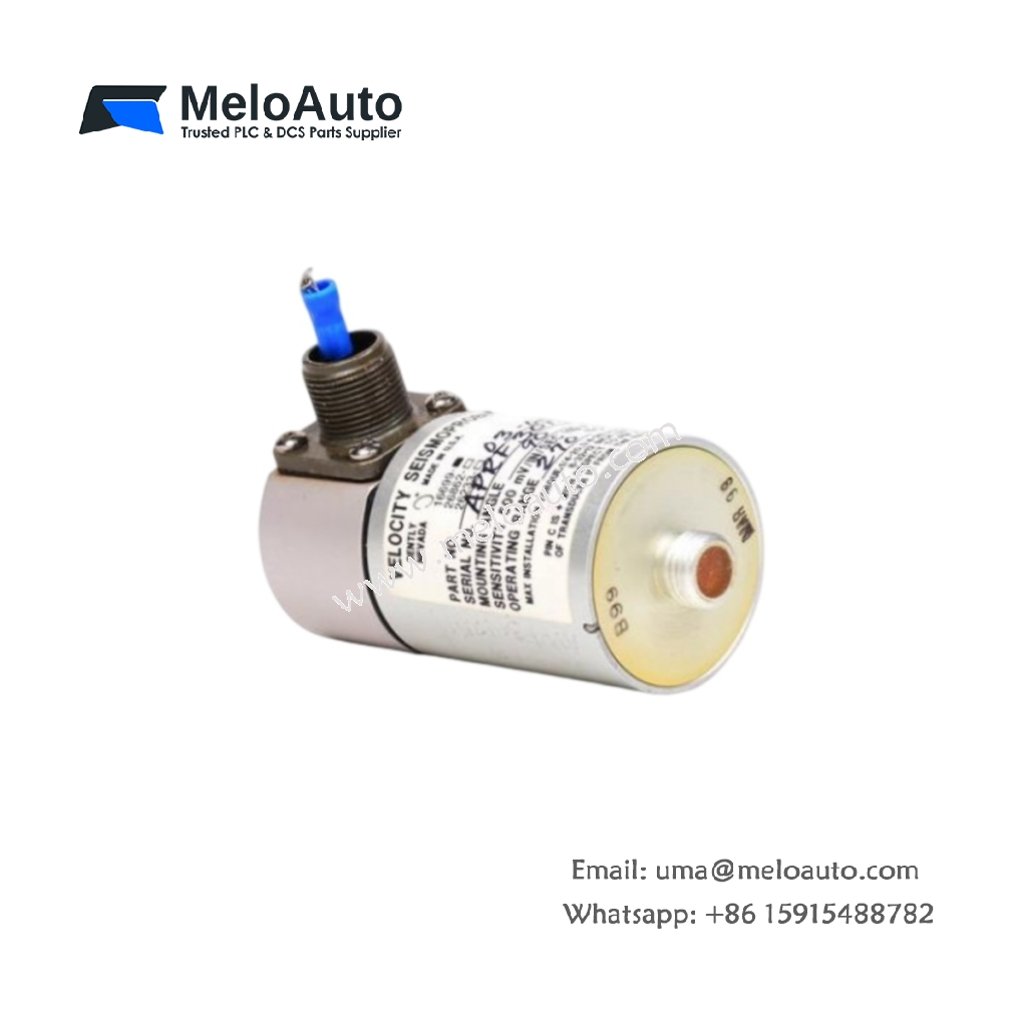
Product Identity
Brand: Bently Nevada
Model: 16699-01-02-02
Category: Seismoprobe Velocity Transducer
Technical Specifications
| Parameter | Specification |
|---|---|
| Model | 16699-01-02-02 |
| Sensor Type | Moving-coil velocity transducer |
| Frequency Response | 10 Hz to 1,000 Hz |
| Sensitivity | 20 mV/mm/s (nominal) |
| Output Signal | AC voltage proportional to velocity |
| Operating Temperature | −35 °C to +100 °C |
| Weight | Approximately 140 g |
| Mounting Thread | 1/4-28 UNF stud |
| Connector | 2-pin military-style connector |
| Internal Components | Coil, magnet assembly, spring suspension |
| Energy Storage | None (self-generating passive design) |
Overview
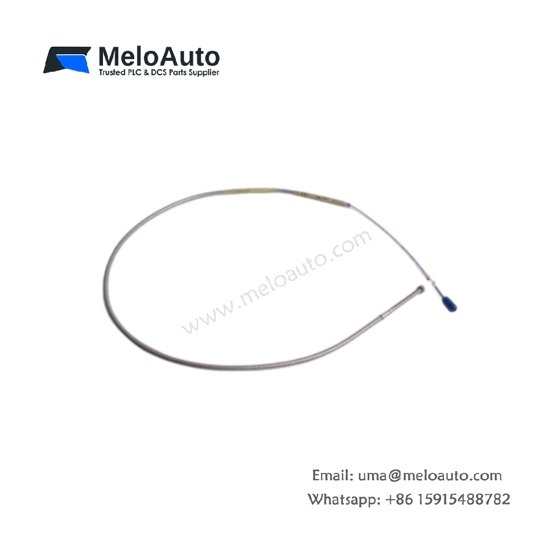
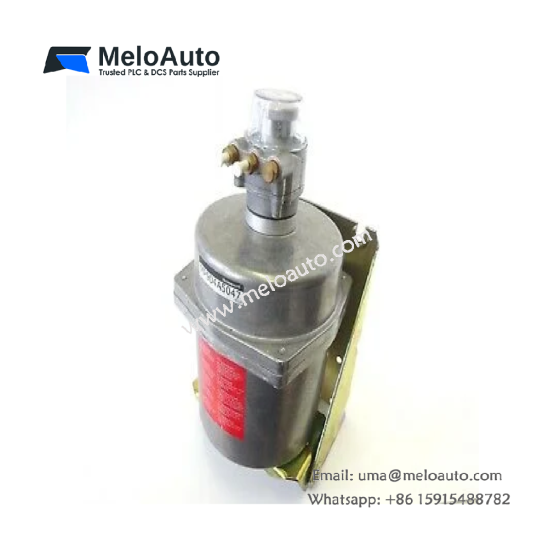
The 16699-01-02-02 works as an absolute casing vibration sensor within the Bently Nevada Seismoprobe family. It converts mechanical motion into a proportional AC voltage signal. Therefore, engineers trust it for machinery protection and condition monitoring. This transducer needs no external power because its moving coil generates voltage inside a magnetic field. Consequently, wiring stays simple in remote or hazardous installations. The sealed housing also resists oil, dust, and mechanical shock.
How It Works
Inside the sensor, a precisely wound coil suspends on a spring mechanism around a permanent magnet. When the machine casing vibrates, the coil moves relative to the magnet. This relative motion induces a voltage that mirrors vibration velocity. As a result, the output signal directly reflects machine behavior without amplification. The design contains no active electronics, so it delivers excellent long-term stability. Furthermore, the passive architecture avoids drift issues common in powered sensors.
Mounting and Installation
Operators typically mount the 16699-01-02-02 on bearing housings or structural frames. The 1/4-28 UNF threaded stud provides a secure mechanical connection. Meanwhile, the 2-pin military-style connector ensures reliable signal transmission. Proper surface preparation matters greatly for accurate velocity readings. Therefore, technicians should mount the sensor perpendicular to the measured axis. Additionally, torque specifications protect the housing from stress damage.






WeChat
Scan the QR Code with wechat