 MeloAuto-Trusted PLC & DCS Parts Supplier
Redefining the Next Generation of Autonomous Combat Systems
The collaboration between GE Aerospace and Shield AI marks a major step in the evolution of autonomous aerial warfare. Under a new Memorandum of Understanding (MOU), GE Aerospace will supply its F110-GE-129 engine to power Shield AI’s next-generation X-BAT fighter jet — an AI-driven, vertical take-off and landing (VTOL) aircraft designed for long-range, high-risk missions.
With over 11 million flight hours and a legacy of reliability since the 1980s, the F110 engine’s integration into X-BAT demonstrates how industrial automation, AI, and advanced propulsion are converging to create the future of defense technology.
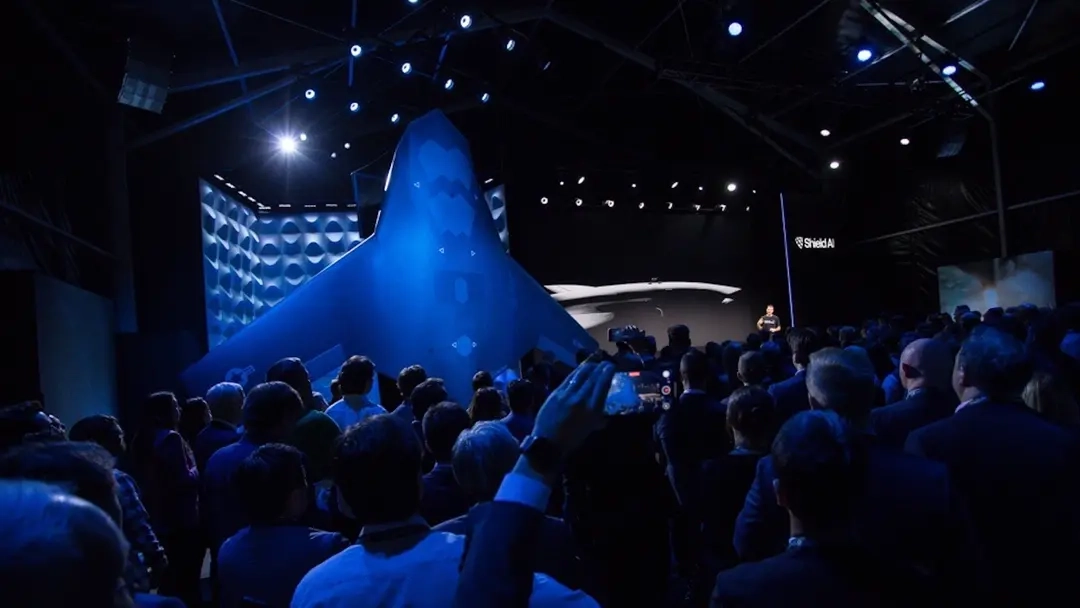
GE Aerospace and Shield AI push the limits of autonomous VTOL and smart control systems.
Proven Reliability: The F110-GE-129 Engine
At the core of the X-BAT is GE Aerospace’s F110-GE-129, one of the most trusted engines in modern aviation. This engine has powered leading fighter aircraft such as the F-15 and F-16, proving its performance under extreme conditions.
The F110 features an Axisymmetric Vectoring Exhaust Nozzle (AVEN), providing exceptional maneuverability and thrust vectoring — essential for VTOL operations. Its fuel efficiency, power density, and service record make it an ideal fit for autonomous systems that demand precision and endurance.
According to Armor Harris, Senior Vice President of Aircraft Engineering at Shield AI, “The F110 engine offers the proven operability and power our VTOL design requires.”
From an industrial standpoint, this collaboration highlights how established control systems and automation technologies are being adapted for autonomous military platforms — ensuring performance stability while reducing human dependency.
Shield AI’s X-BAT: Merging AI Autonomy with VTOL Flexibility
First unveiled in Washington, D.C., on October 21, the X-BAT was introduced as a pilotless, AI-driven VTOL fighter jet capable of operating in contested and communication-limited environments.
It uses Shield AI’s proprietary Hivemind autonomy software, which enables independent or coordinated operation alongside piloted aircraft. This makes X-BAT a potential “drone wingman,” capable of supporting missions without direct human control.
The company claims X-BAT is the only aircraft in its category that combines VTOL capability with a range exceeding 2,000 nautical miles and full mission payload capacity. Its compact design even allows three X-BAT units to fit within the deck space of a traditional fighter or helicopter — maximizing efficiency and tactical flexibility.
GE Aerospace’s Role in Autonomous Propulsion Development
Amy Gowder, President and CEO of GE Aerospace’s Defense & Systems division, emphasized the partnership’s significance:
“We’re combining GE’s experience in propulsion with Shield AI’s innovation in autonomy to accelerate the journey from concept to capability.”
This statement reflects GE Aerospace’s commitment to advancing industrial automation within aviation propulsion systems. The partnership also demonstrates a broader shift toward integrated AI-powered control systems — technologies that could later influence factory automation, process control, and mission-critical DCS applications in civilian industries.
GE Aerospace continues to invest in next-generation propulsion technologies, including dual-mode ramjet (DMRJ) and rotating detonation combustion (RDC) systems. These innovations aim to improve fuel efficiency, thrust generation, and system reliability — goals equally relevant in the industrial automation sector.
A Legacy of Performance and Innovation
With more than four decades of service, the F110 engine has accumulated over 11 million operational flight hours, solidifying its reputation as one of the most dependable engines in its class.
Its AVEN thrust vectoring capability provides X-BAT with advanced control for vertical takeoff and landing — a key feature in autonomous operation where precision is critical.
Moreover, GE Aerospace’s continuous improvement of its propulsion systems demonstrates an engineering philosophy similar to PLC and DCS evolution in industrial automation: combining reliability, modular upgrades, and intelligent diagnostics for predictive performance.
Emerging Trends in AI-Driven Defense Systems
The integration of AI in defense automation mirrors trends already shaping smart manufacturing and industrial control. Systems like Shield AI’s Hivemind represent a new generation of autonomous control platforms that could eventually influence factory optimization, predictive maintenance, and real-time decision systems in other industries.
As a result, defense technology is not only reshaping warfare but also pushing boundaries in AI-based automation, sensor integration, and system reliability engineering — key areas of future cross-industry innovation.
Application Scenarios and Industry Impact
While the X-BAT project is defense-oriented, its underlying technologies have broader implications for industrial automation. For instance:
- Autonomous control algorithms developed for Hivemind could optimize factory robotics and logistics systems.
- High-efficiency propulsion control may inspire next-generation industrial turbines and energy recovery systems.
- Advanced diagnostics and monitoring applied in flight systems can improve predictive maintenance across automation plants.
This demonstrates how military AI and control system research can accelerate progress in civilian automation, promoting safer, smarter, and more sustainable operations.
Author’s Commentary
The GE Aerospace and Shield AI partnership is not merely a defense collaboration — it’s a clear example of how AI-powered industrial automation is transforming mission-critical systems. From propulsion control to autonomous decision-making, these innovations underline the convergence of aviation engineering, industrial control, and artificial intelligence.
As the automation industry continues to evolve, the principles behind systems like Hivemind will likely influence how we design smart factories, modular PLC networks, and autonomous control systems in the near future.

WeChat
Scan the QR Code with wechat