 MeloAuto-Trusted PLC & DCS Parts Supplier
Honeywell Supports Key UK Decarbonization Initiatives
Honeywell announced a new partnership with Technip Energies to supply automation technologies for the NZT Power and NEP carbon-capture programs. These projects represent major steps in the UK’s long-term climate strategy. Moreover, both initiatives rely on advanced industrial automation to ensure safe and efficient project execution.
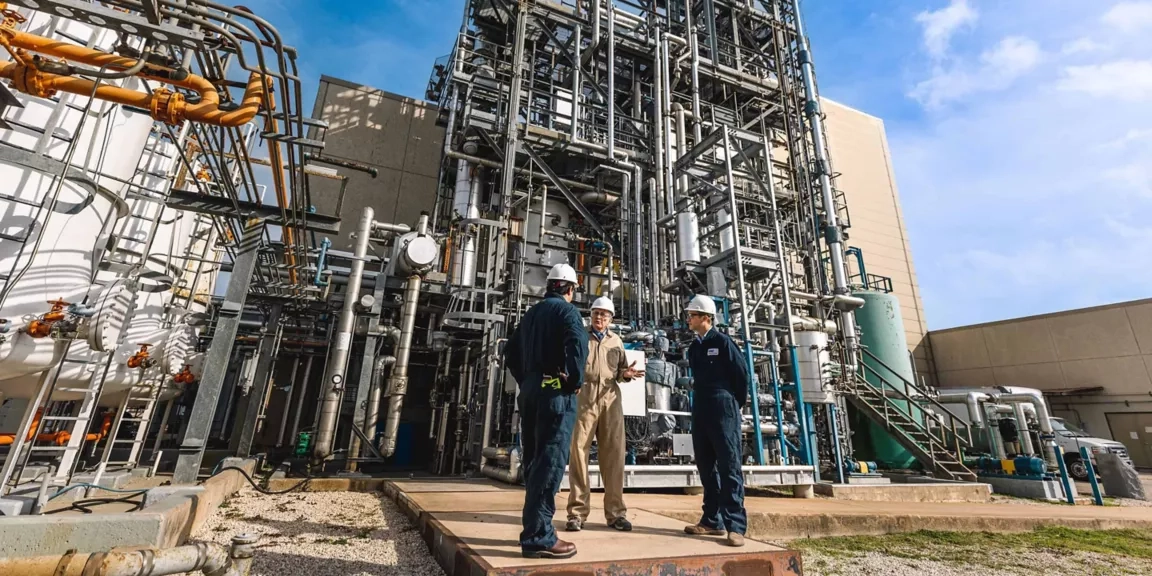
Honeywell provides integrated ICSS automation and control systems for UK carbon capture projects, enhancing safety, efficiency, and low-carbon industrial operations.
ICSS Architecture Combines Process Control and Safety Functions
Honeywell will deliver an Integrated Control and Safety System that unifies process control, safety functions and plant-wide supervision. This approach simplifies engineering and improves operational visibility across large energy assets. In addition, the ICSS platform allows operators to connect DCS, PLC and field devices through a single automation framework.
Based on industry practice, such unified systems often reduce shutdown risks and improve lifecycle performance.
NZT Power Develops a Low-Carbon Gas Plant with CCS
The NZT Power project aims to build the world’s first commercial gas-fired station designed with full carbon-capture capability. The facility will supply more than 740 MW of flexible, low-carbon power to support regional demand. Moreover, the plant expects to capture up to two million tonnes of CO₂ each year.
As a result, NZT Power will help reduce emissions from heavy industry and accelerate the UK’s transition toward net-zero energy systems.
NEP Creates a Regional CO₂ Transport and Storage Network
The NEP project will move captured CO₂ from industrial sites in Teesside and the Humber regions to offshore storage formations. This network includes new onshore pipelines, offshore routes and deep-saline reservoirs beneath the North Sea.
In addition, Honeywell automation systems will monitor pipeline performance, storage stability and long-distance transport reliability.
Such integrated oversight is essential when operators manage multi-site carbon-capture networks.
Consortium Partnership Strengthens Project Delivery
Technip Energies leads a consortium that includes GE Vernova and construction partner Balfour Beatty. Together, they will handle engineering, procurement and construction activities for both CCS projects.
Moreover, this partnership demonstrates how strong coordination can accelerate complex industrial programs. Many global CCS developers now follow similar multi-company structures to reduce risk and ensure consistent technical standards.
Honeywell Expands Its Role in Clean-Energy Automation
Honeywell supports UK energy operators through its extensive local presence and broad engineering capabilities. The company operates more than twenty sites across the country and employs thousands of automation specialists.
Moreover, Honeywell’s digital platforms—such as Honeywell Forge—help modernize legacy control systems, optimize production and strengthen safety performance. These advantages align with the UK’s “Clean Energy 2030” objectives.
Company Background: Honeywell’s Automation Expertise
Honeywell provides advanced solutions across aerospace, building automation, factory automation, industrial automation and process industries. Its technologies help users increase reliability, reduce emissions and improve operational stability.
Therefore, Honeywell remains a trusted partner for operators who prioritize safety, efficiency and low-carbon innovation.
Author Insights on Automation and CCS Trends
In my experience, carbon-capture projects increasingly require flexible control systems capable of managing complex, multi-source CO₂ flows.
Moreover, operators now demand higher data visibility, faster diagnostics and tighter integration between safety and process units.
Therefore, suppliers with strong ICSS design capabilities will gain a clear advantage in the global energy-transition market.
These UK projects may become reference models for CCS deployments in Europe and the Middle East.
Industrial Application Scenarios
Below are practical use cases where similar automation solutions deliver measurable benefits:
1. Power Generation
Gas-fired plants integrate ICSS platforms to support low-carbon operation and flexible energy dispatch.
2. Refining and Petrochemicals
Facilities add CO₂ capture units connected to existing DCS or PLC networks for continuous monitoring.
3. Pipeline Transport
Operators use high-integrity safety systems to protect compressors, pipeline stations and remote valves.
4. Offshore Storage
Automation frameworks help manage reservoir pressure, injection rates and long-term storage integrity.

WeChat
Scan the QR Code with wechat